Who this plan is for (and who it’s not)
Route at a glance
A premium 14-day, one-way couples route designed to keep the icons while reducing “Golden Route burnout.”
- Tokyo (4 nights)
- Hakone (1 night)
- Kanazawa (2 nights)
- Takayama (2 nights)
- Kyoto (3 nights)
- Osaka (1 night)
Tip: This route pairs naturally with open-jaw flights (arrive Tokyo, depart Osaka area), based on your preferences and airfare.
Best time to go (Autumn focus: late Oct–late Nov)
What you get with this paid Cracken Travel plan
- Full day-by-day itinerary with couple-friendly pacing and “what to do first” flow
- Kyoto crowd strategy (early-start rules + one-icon-per-half-day framework)
- Reservation-first checklist for ryokan nights, festival risk, and peak foliage weeks
- Transportation made simple (rail + bus approach, plus a seat-reservation mindset)
- Neighborhood-based stay guidance by base (choose your vibe, reduce transit friction)
Time-sensitive items are included with official links so you can confirm details right before you travel.
14-day couples itinerary (day-by-day preview)
Preview only—enough to feel the rhythm and romance of the route, without giving away the full paid guide.
Days 1–4 — Tokyo (landing, old-meets-new, and one day trip)
Neon nights balanced with calm shrines, gardens, and design-forward neighborhoods—then choose a single day trip that matches your shared vibe.
Day 5 — Hakone (onsen reset)
A deliberately slower day: scenery, a museum-or-lake choice, and a ryokan/onsen night that feels like a relationship reset.
Days 6–7 — Kanazawa (“Old Japan” begins)
Garden mornings, castle-side history, and evening streets with a calmer tempo than the big cities.
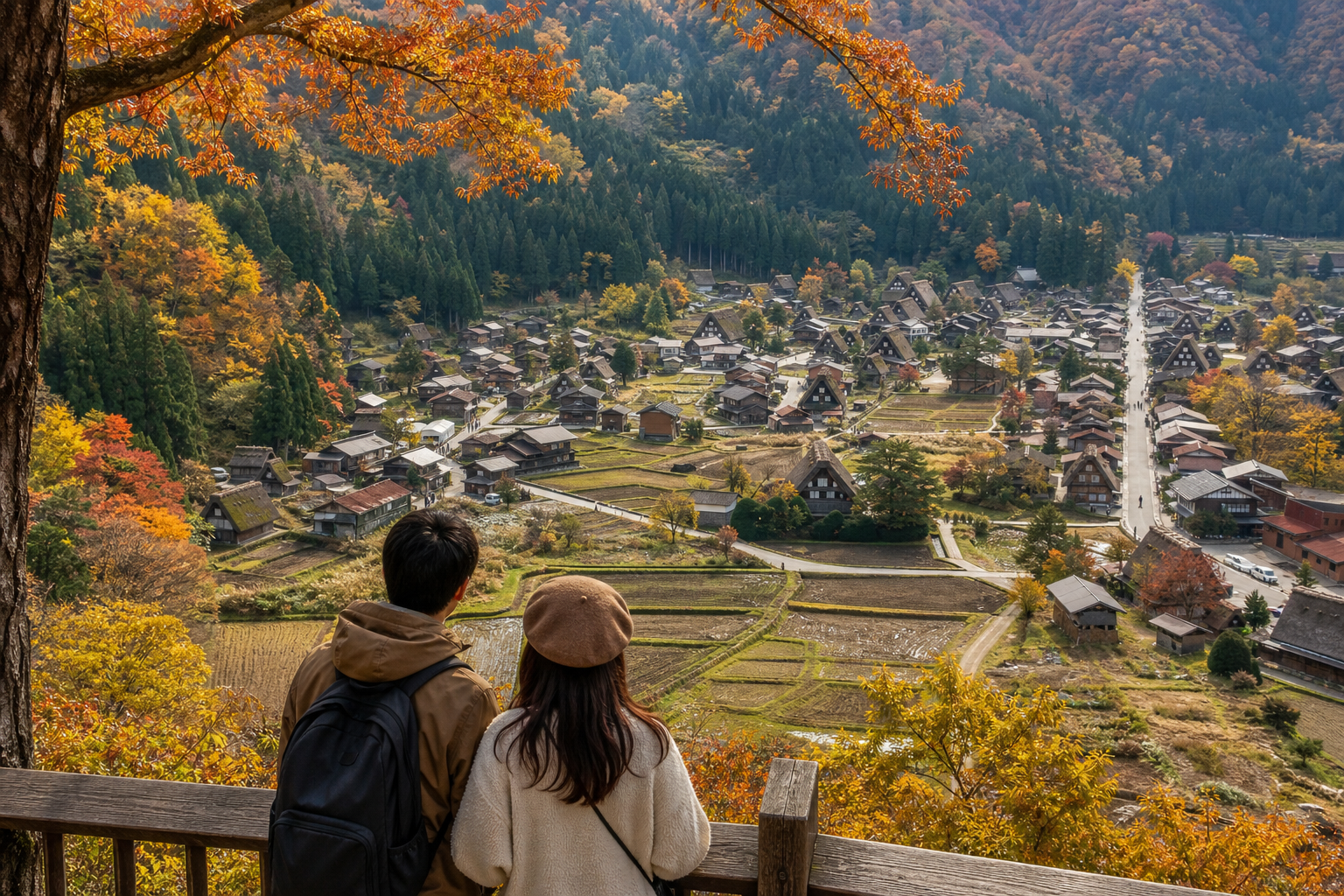
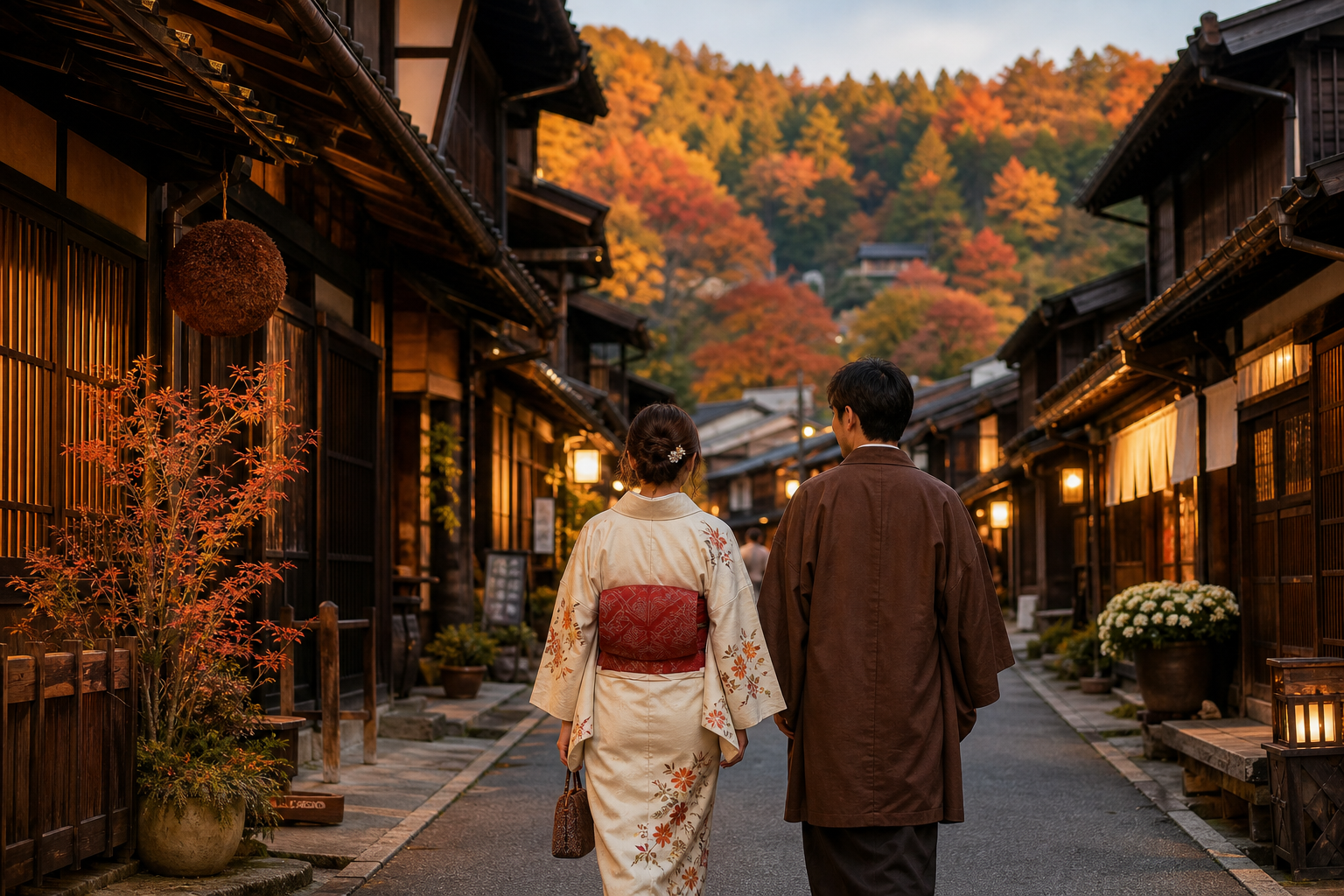
Days 8–9 — Shirakawa-go day trip + Takayama (lantern streets and craft culture)
Classic village scenery en route to Takayama’s old town atmosphere—then an unhurried day of markets, crafts, and a signature dinner night.
Days 10–12 — Kyoto (icons, done smart)
Early starts. One major icon per half-day. Shoulder hours for the most popular zones—so Kyoto feels romantic instead of exhausting.
Days 13–14 — Osaka (food finale + one day trip)
Street-food energy and nightlife culture, plus an easy day trip choice (Nara, Himeji, or Kobe) based on your couple vibe.
Where to stay (neighborhood guide by base)
The paid plan includes base-by-base “choose your vibe” guidance and how to reduce packing friction.
Transportation made simple (rail + bus)
Shirakawa-go day trip logistics depend on bus operators and schedules—verify timetables and reservation requirements before you commit.
Booking priorities (what to lock first)
- Takayama lodging if your dates overlap Oct 8–11 (festival Oct 9–10 annually).
- Hakone ryokan/onsen night (confirm property rules before paying).
- Kyoto stay (peak foliage weeks sell fast; consider the city’s tax updates in your budget).
- Must-do experiences you’ll regret missing (date-night dinners, seasonal night admissions, etc.).
- Long-ride rail seats once dates are firm (especially in peak periods).
Verify-before-you-go (time-sensitive items)
Kyoto: costs + seasonal operations
- Kyoto accommodation tax: official notice indicates rate changes starting March 1, 2026—confirm brackets and application. Kyoto Travel notice · Kyoto City page
- Autumn leaves calendar + special admissions/light-ups: confirm dates/ticketing close to travel. Kyoto seasonal page
Rail seat rules: comfort + feasibility
- Check JR Central notices for your exact week (including any all-reserved advisories). JR Central hub
- Reference: JR Central advisory PDF (time-sensitive)
Hakone: pass + service status
- Verify Freepass pricing/coverage and any disruptions. Odakyu brochure (time-sensitive)
Kanazawa: admissions/hours
- Kenroku-en: confirm hours/closures and admission (adult published as ¥320; time-sensitive). Kenroku-en official site
FAQ (quick answers)
Is this itinerary good for a first-time Japan couple?
Yes—icons plus a calmer middle (Kanazawa/Takayama) and a Hakone reset, with Kyoto pacing built for peak season.
Can we reduce hotel moves?
Yes—many couples keep Kyoto as a base and day-trip Osaka/Nara for fewer check-ins. The paid plan includes a simple “reduce moves” option.
Will this avoid crowds entirely?
No—Kyoto in autumn is popular. This plan focuses on timing and pacing so the experience feels better in real conditions.
Keep exploring
- Japan ready-made trips
- Couples adventures
- Fall getaways
- Japan packing list
- More Tokyo time
- Kyoto, done smart
Some links may depend on your current site catalog structure.
Ready to adventure?
Get this ready-made Cracken Travel plan and spend less time planning.